
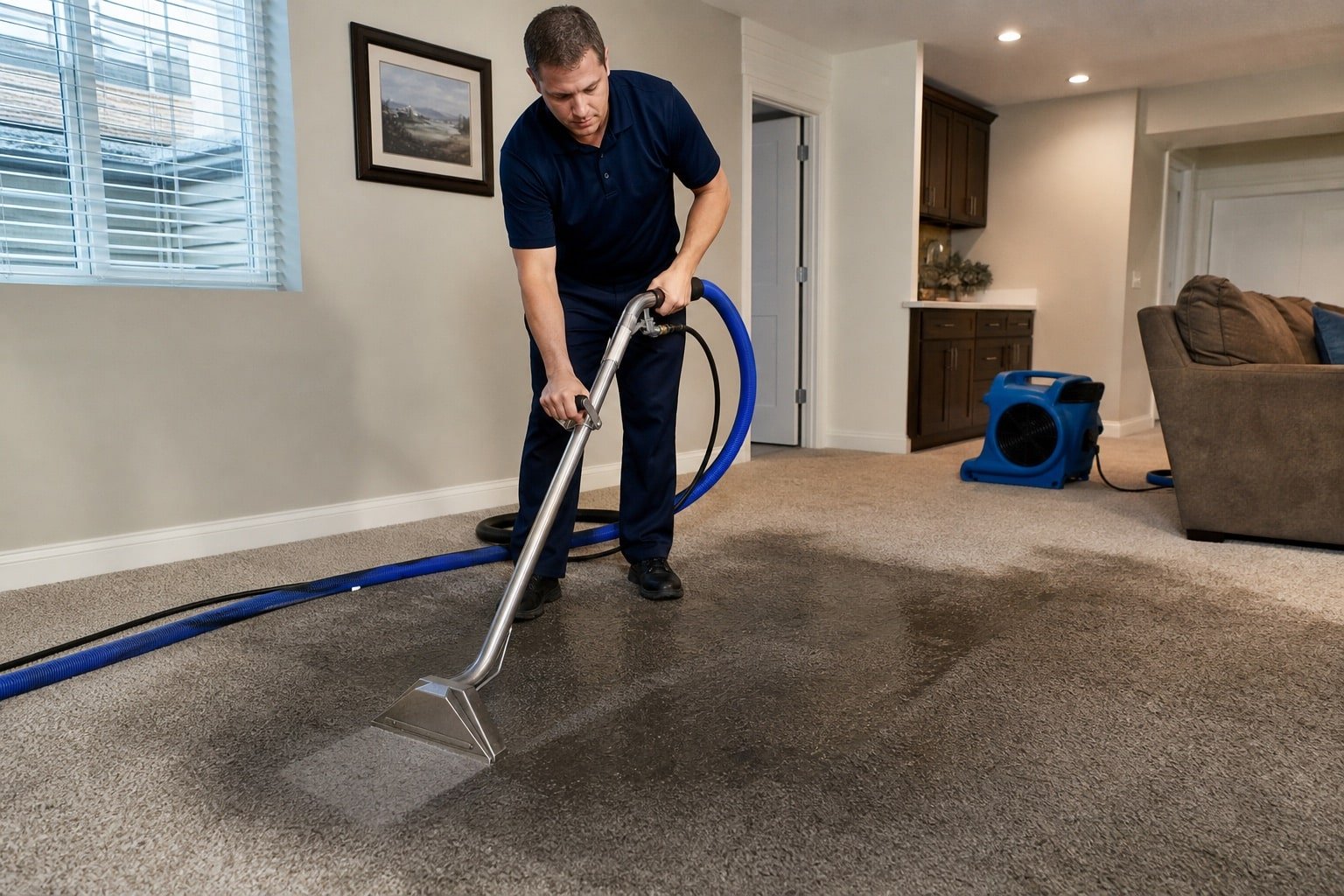
A burst supply line, a failed water heater, spring snowmelt finding its way into a Cache Valley basement — however the water got in, the clock is now running. You have roughly 24 to 48 hours to get carpet dry before mold starts, and what you do in the first hour matters most. Here’s the playbook.
The First 10 Minutes: Stop the Water, Stay Safe
Shut off the source — the fixture’s supply valve or the home’s main. Then think electricity before you step in: if water is anywhere near outlets, power strips, or appliances, shut off the breaker to that room first. Move furniture and anything valuable off the wet area.
Know Your Water: Clean, Gray, or Black
- Clean water — supply lines, water heaters, rain. Safe to DIY if you move fast.
- Gray water — washing machines, dishwashers, aquariums. Contaminated; gloves on, and lean toward professional help.
- Black water — sewage backups and outdoor flooding. Stop. This is a health hazard, the carpet pad is not salvageable, and it’s a job for professionals, period.
How to Dry Wet Carpet: Step by Step
- Extract, extract, extract. A wet/dry shop vac with slow, overlapping passes removes far more water than any amount of toweling. This step determines everything after it.
- Get air moving. Every fan you own, aimed across (not down at) the carpet. In our dry Utah climate, cross-ventilating with open windows genuinely speeds things up — unless it’s humid or raining.
- Run a dehumidifier in the closed room if you have one — it pulls out the moisture the fans evaporate.
- Protect furniture legs with foil or blocks so wood stain and rust don’t transfer into wet carpet.
- Check the pad. If carpet squishes underfoot, lift a corner off the tack strip and get airflow underneath — a soaked pad under “dry” carpet is where mold starts.
The 24–48 Hour Mold Window
Carpet pad is a sponge — it holds water long after the surface feels dry, wicking moisture into the carpet backing, tack strips, and baseboards. Mold can establish within a day or two, and a musty smell means it already has. If the carpet isn’t drying on schedule, don’t wait it out: a soaked pad usually needs to be replaced even when the carpet above it can be saved.
When to Call for Professional Water Extraction
Call a pro when more than a small area is soaked, water has wicked up the walls or baseboards, the pad is saturated, or the water was anything other than clean. Professional water damage extraction brings what a shop vac can’t: high-vacuum extraction that pulls water out of the pad, moisture meters to find the water you can’t see, commercial air movers and dehumidifiers, and antimicrobial treatment so the room dries clean instead of musty. Acting within the first day is usually the difference between drying the carpet you have and buying new carpet.
Will Homeowners Insurance Cover It?
Sudden, accidental water damage — a burst pipe, a failed appliance — is typically covered; gradual leaks and outdoor flooding often are not. Photograph everything before and during cleanup, keep every receipt, and call your agent early. (Check your own policy — this is general information.)
Wet Carpet Right Now? We’re Fast
Speedy’s Carpet Cleaning provides water damage extraction across Logan and Cache Valley — the name isn’t an accident. Call (435) 757-8333 now, or reach us online, and we’ll help you beat the mold window.